






















The 5th GMIF2026 Innovation Summit Successfully Concludes in Shenzhen
The 5th GMIF2026 Innovation Summit successfully concluded at the Renaissance Shenzhen Bay
Hotel. Co-hosted by the Shenzhen Memory Industry Association (SMIA) and School
of Integrated Circuits at Peking University, the summit, themed "The Future Built on AI Memory and Storage," has brought together industry forces from IDMs,
controllers, and memory solution providers to OSATs, equipment and material
suppliers, server and AI infrastructure vendors, automotive electronics
companies, AI applications developers, academic institutions, and investors.
In-depth discussions explored the evolution of memory and storage technologies,
industry trends, and application innovations in the AI era.
As AI training and inference workloads continue to scale, the
boundaries of memory and storage technology and its applications keep expanding
— from storage media and controllers to system architecture and AI applications
themselves. GMIF 2026 approached the industry through the lens of the token economy, spotlighting inference
efficiency, enterprise-grade storage, cloud-edge-device coordination,
industrial capital, and the shifting global competitive landscape.
The summit officially kicked off with an
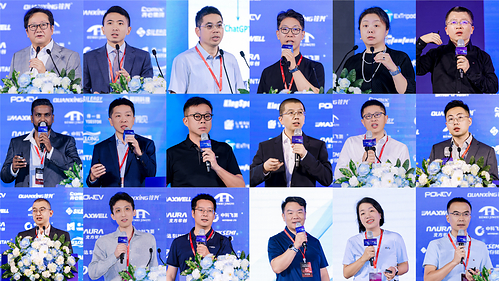
opening remarks from Rixin Sun,
President of the Shenzhen Memory Industry Association (SMIA). He
looked back on GMIF's growth since its founding in 2019. Now in its fifth
consecutive year, the summit has steadily expanded in scale, industry reach,
and influence, with its agenda consistently tracking the pulse of the storage
sector.
President
Sun said GMIF will continue to pursue a more specialized and differentiated
approach going forward — staying close to frontier industry trends and
supply-chain coordination, while connecting
storage companies with adjacent players in AI compute and end-user applications
to drive technical exchange,
supply-demand matching, and ecosystem collaboration.
Daniel Yen, Executive Director at Morgan Stanley, opened the technical
discussion with a look at how generative and agentic AI are reshaping
infrastructure demands. As model weight loading, KV cache management, and data
read/write scheduling grow more complex, Daniel noted that AI capital expenditure keeps rising — and
memory and storage's share of that investment, and its strategic value, are
rising with it. He pointed to the "memory wall" as a defining
challenge now driving fresh innovation
in storage architecture, advanced packaging, and related technologies.
Yimao Cai, Dean of School of Integrated Circuits at
Peking University, addressed the topic from the angle of AI inference architecture,
discussing the growing role of high-bandwidth storage and multi-media
integration. As large model inference drives up demand for capacity, bandwidth,
and cost efficiency, Prof. Cai suggested that high-bandwidth flash (HBF) and heterogeneous multi-media storage
architectures stand to play a larger role — combining HBM, NAND, and RRAM to
strike a better balance between performance, capacity, and cost for AI
inference.
Leave A Comment