






















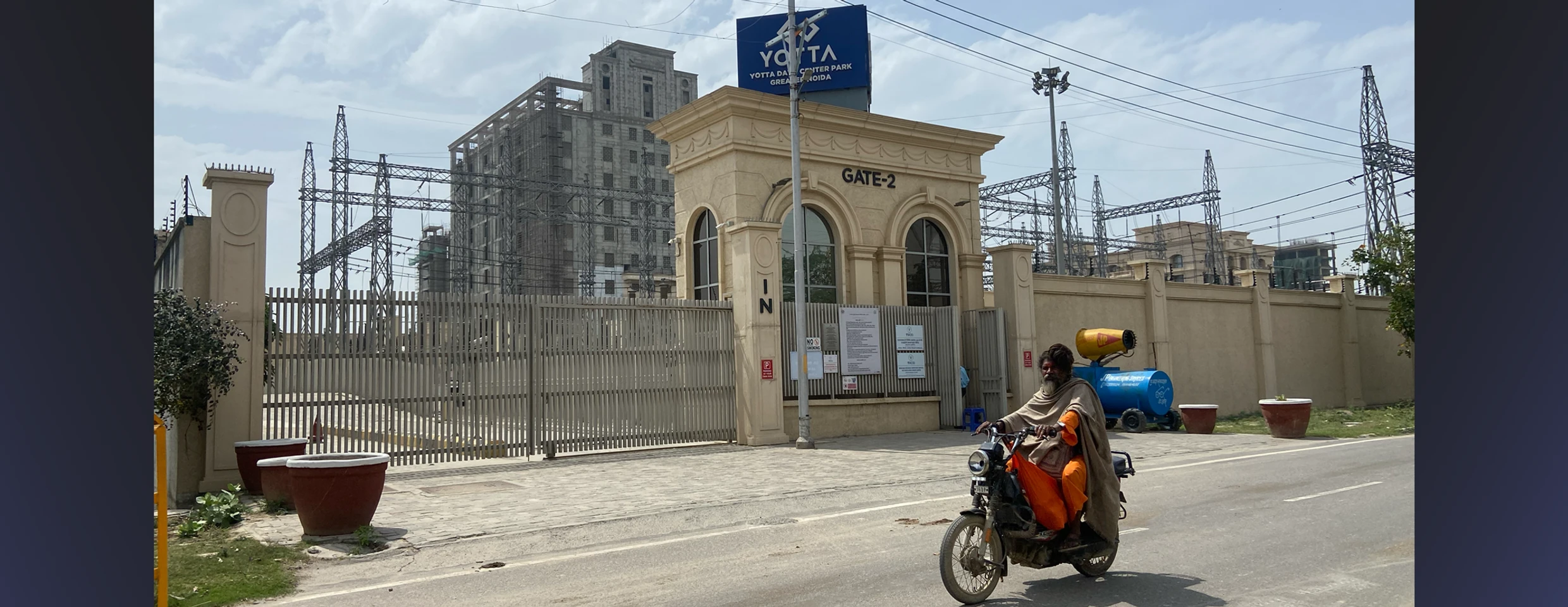

Asia-Pacific’s AI scaling problem is bigger than compute
Asia-Pacific has no shortage of ambition when it comes to artificial intelligence. Governments are announcing AI strategies, hyperscalers are expanding infrastructure, and enterprises are moving generative AI from experimentation into customer service, software development, finance and operations. But ambition is increasingly colliding with reality.
The region’s
AI challenge is no longer simply whether organisations can access powerful
models or GPUs. It is whether the infrastructure, energy systems, data foundations
and operating models can support AI at scale.
McKinsey
estimates that APAC could account for roughly 34 percent of global data-centre
demand by 2030, up from its current position as a major growth market. More
than 70 percent of current APAC data-centre demand comes from traditional
compute, storage and cloud workloads, while AI training and inference account
for around 30 percent. By 2030, McKinsey expects the mix to move closer to
50/50.
The scale of
investment reflects that trajectory. AWS, Google, Microsoft and Oracle have
committed more than US$160 billion between January 2024 and May 2026 to AI
infrastructure in APAC, according to McKinsey.
Alibaba has
announced at least US$52 billion in global cloud and AI infrastructure
investment over three years, while ByteDance could spend around US$30 billion
on AI infrastructure in 2026 alone.
China is
expected to remain the region’s largest market, potentially accounting for more
than 70 per cent of APAC data-centre demand by 2030. Outside China, new data-centre
corridors are emerging across East and Southeast Asia, including Johor in
Malaysia, Chonburi in Thailand, Jakarta in Indonesia and Osaka in Japan.
Yet building
capacity is proving harder than expected.
AI
infrastructure is ultimately constrained by physical infrastructure. Data
centres require enormous amounts of electricity, cooling capacity and grid
connectivity.
The
International Energy Agency estimates that global data-centre electricity
consumption increased 17 percent last year, while AI-focused data centres grew
even faster. Data-centre electricity use is expected to double by 2030, with
AI-focused facilities potentially tripling their electricity consumption. At
the same time, shortages of transformers, gas turbines, advanced chips and
other components, alongside delays in grid connections and approvals, are
creating new bottlenecks.
For
enterprises, this changes the equation. Adding more compute is not necessarily
the solution when the constraint is electricity, cooling, network capacity or
the availability of suitable facilities.
Leave A Comment