
























Volume of AI-Generated Code is Significantly Increasing "Accessibility Debt" Risk: Deque Systems
A
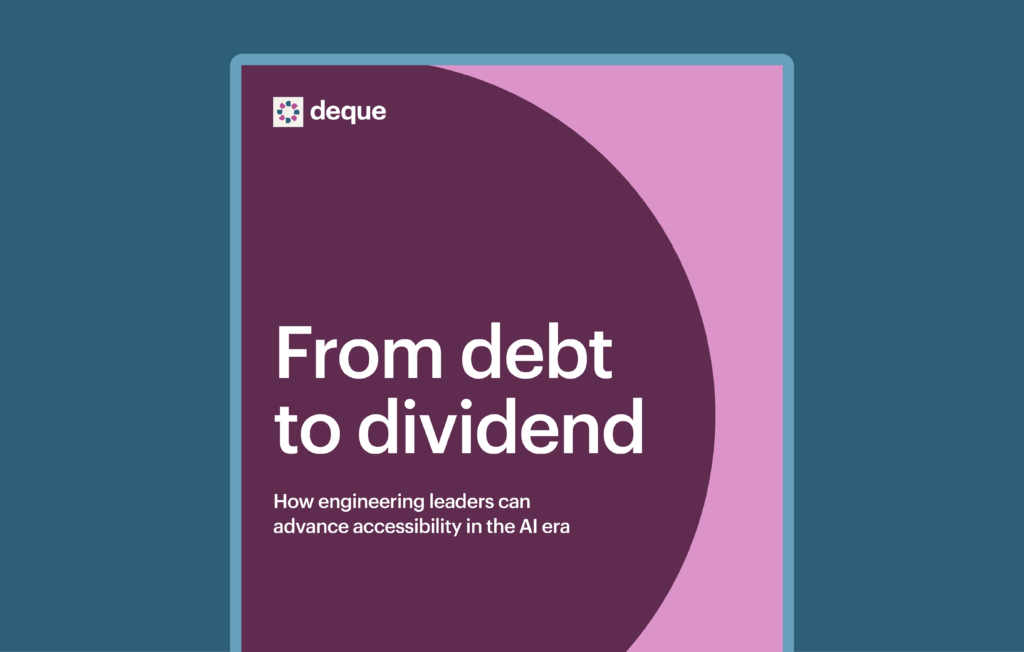
newly released survey and accompanying report from Deque Systems, the global digital
accessibility leader advancing digital equality with innovative software
solutions, highlights a significant paradox. With development teams using AI
coding tools to release software faster than ever before, the number of digital
accessibility failures is increasing.
This
escalating rate, combined with intensifying regulatory pressure, is leaving
many organizations exposed to significant legal, financial and reputational
damage. Fortunately, there's still time to course-correct, even as enforcement
and penalties for noncompliance are expected to pick up in the months ahead.
"We
are at a genuine inflection point, where regulation, AI transformation and the
state of digital accessibility are converging in ways that demand a new kind of
response from engineering leadership," says Preety Kumar, CEO and Founder,
Deque Systems. "It's time to seize the moment to improve web and mobile
experiences for people with disabilities everywhere."
The survey
found that 88 percent of software engineering leaders have high or very high
trust in the accessibility of their AI-generated code. Despite this, 64 percent
cite accessibility as a top driver of post-production rework. This aligns with
a recent analysis finding that
95.9 percent of the top home pages worldwide contain detectable WCAG 2
failures, reversing a trend of improvement over the previous six years. This
isn't altogether surprising. In the GAAD Foundation's AIMAC benchmark, 35 of 37 of the
latest AI models (94.59 percent) produce multiple critical and serious issues
by default when asked to generate HTML.
This
situation is particularly pressing as we mark the first anniversary of the
European Accessibility Act (EAA), which is expected to intensify regulations
and penalties for noncompliance. Notably, U.S.-based companies that market and
sell to EU consumers are also subject to these rules, underscoring the
far-reaching implications for businesses worldwide.
Moreover,
recent extensions by the Department of Justice on the ADA Title II deadlines do
not mean that digital accessibility requirements will fade away anytime soon.
The message from regulatory bodies is clear - organizations must act now to
ensure their websites and mobile apps are accessible for all people,
everywhere.
AI use has enabled development teams to
dramatically accelerate release velocity, shipping substantially more code with
ever-increasing speed. But digital accessibility is complex, and simply
prompting AI to produce accessible code is not enough to ensure compliance and
reduce risk. Compliance demands accuracy and proof, and releasing inaccessible
products and services can lead to serious legal, financial, and reputational
damage. Fortunately, with expert guidance and the right tools and practices,
digital accessibility can keep pace.
Kumar encapsulates
the industry's opportunity: "At this critical juncture, we must ensure
that AI is a catalyst for advancing digital accessibility. As our recent
reporting demonstrates, accessibility must be fully embedded into AI-assisted
development workflows. When that happens, costs go down. Risk goes down. This
is how we turn accessibility debt into accessibility dividend."
Leave A Comment