



















“In sectors like hardware and power tools, the evolution will be gradual and practicalâ€
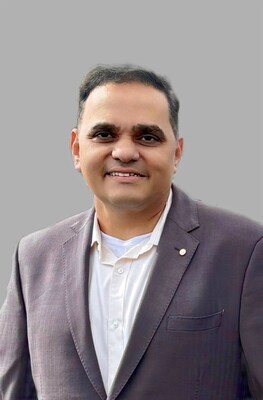
Maav Industries Ltd—a trusted name in plastics, hardware, and power tools with nearly four decades of credibility behind it. What sets Mr. Agalpady apart is not just his entrepreneurial instinct but his deep-rooted commitment to sustainability and regional development. In an interaction with Mr. Madhusudhan Agalpady, Founder & Managing Director, Maav Industries about the company’s product quality and operational efficiency across such a diverse portfolio and future plans.
With operations spanning three distinct verticals, Plastics,
Hardware, and Power Tools, how do you ensure consistent product quality and
operational efficiency across such a diverse portfolio?
We don’t manage quality by vertical; we manage
it by process. Whether it’s plastics, hardware, or power tools, the same
control layers apply, material traceability, in-house testing protocols, and
fixed tolerance benchmarks. The real complexity isn’t product diversity, it’s
discipline.
Where
we’re different is that plastics give us upstream control through recycling, so
we understand material behaviour before it reaches the factory floor. Hardware
and power tools then impose mechanical and endurance standards that force those
materials to perform over time. Operational efficiency comes from this
cross-learning, failures in one category often reveal design or process
improvements in another.
We
deliberately grow slowly across verticals because consistency breaks the moment
speed overtakes process. Our view is that if a product can’t survive repetitive
industrial use, it doesn’t belong in our portfolio, regardless of margin.
Maav now recycles more
plastic annually than many mid-sized Indian towns generate as waste. What are
the key technological, logistical, and regulatory challenges involved in
operating recycling at this scale, and how do you ensure the financial
sustainability of such an ambitious operation?
Recycling
at scale stops being an environmental problem and becomes a systems problem.
Technologically, the biggest challenge isn’t processing plastic, it’s managing
inconsistency. Post-use plastic arrives mixed, degraded, and unpredictable, so
we’ve had to build in-house sorting, washing, and material-stabilisation steps
that most manufacturers don’t invest in because they slow throughput.
Logistically, the collection is fragmented. Waste doesn’t move like raw
material; it moves through municipalities, informal networks, and seasonal
industries like fisheries. That uncertainty forces us to design flexible
inventory and storage models rather than just-in-time supply chains.
On the
regulatory side, compliance under evolving EPR norms is necessary but
incomplete, rules focus on volumes recycled, not on whether recycled material
actually replaces virgin plastic in durable products. Financial sustainability
comes from one discipline: recycled material must perform at industrial
standards. If it can’t, the model collapses. We don’t subsidise recycling with
manufacturing profits; we integrate the two so that waste reduction and
commercial viability rise or fall together.
You have developed a proprietary in-house recycling system for
processing post-use plastic. What gaps in existing recycling technologies
prompted this innovation, and how does your system improve efficiency, output
quality, or environmental impact compared to conventional methods?
The
honest truth is that recycled plastic can absolutely meet industrial durability
standards, but only if you treat recycling like manufacturing, with the same
discipline, testing, and accountability. Our system is “proprietary†mainly
because it’s built around process control, not a single magic machine. We focus
on three things conventional methods often compromise on for speed i.e better
segregation, decontamination/washing discipline, and material consistency
checks before the plastic becomes usable feedstock. That improves output
quality because you’re not trying to fix problems at the moulding stage, you’re
preventing them at the material stage.
The
biggest environmental win in recycling is avoiding rework and rejection. When
material quality is stable, you reduce scrap, energy waste, and repeated
processing. And when processing happens in-house, you also cut the back-and-forth
transport and “middle losses†that happen when material changes hands multiple
times.
Do you believe meaningful environmental impact in India often goes
underreported? How can industry and policymakers better recognise such
ground-level efforts?
Yes,
because much of India’s most meaningful environmental work doesn’t look like a
campaign, it looks like operations. It happens quietly inside factories, supply
chains, and collection systems, where impact is measured in avoided waste,
improved material life, and processes that run consistently rather than in
headlines or visual storytelling. As a result, efforts that deliver real,
measurable outcomes often go unnoticed because they’re harder to package or
publicise. Recognition improves when we reward outcomes over optics. Industry
can contribute by reporting standard, verifiable metrics, such as volumes
processed, material rejection rates, and how much recycled output actually
replaces virgin plastic in long-life applications. Policymakers can support this
by strengthening transparency and traceability under EPR, focusing not just on
tonnage but on end-use quality, while also offering stable regulations and
easier access to finance and infrastructure for compliant operators.
Maav’s transition from a distribution-led business to
recycling-driven manufacturing reflects a broader but under-discussed shift
within India’s industrial ecosystem. What factors accelerated this
transformation for you, and what lessons can other traditional businesses draw
from this journey?
The
shift didn’t come from a strategy document, it came from friction. Over the
years, distribution became harder to sustain as margins narrowed, suppliers
consolidated, and control over quality and availability weakened. At the same
time, we were operating in markets where discarded plastic was everywhere,
while manufacturers were importing or sourcing virgin material at rising costs.
Recycling emerged as a practical solution to a real imbalance we were seeing
daily, not as a sustainability add-on.
What
other traditional businesses can take from this is that change usually starts
with operational pressure, not vision statements. Our background in
distribution helped us understand what actually sells, how products fail, and
what customers won’t compromise on. Manufacturing, and later recycling, forced
longer time horizons, heavier reinvestment, and tighter process discipline. But
it also reduced dependency on external suppliers and made the business harder
to disrupt. The lesson is simple: when parts of your business keep breaking,
that’s often where your next capability needs to be built.
How do you see industrial heartlands shaping India’s circular
economy ambitions over the next decade?
The
long-term opportunity is structural, not symbolic. Government and industry
estimates place India’s circular economy potential at over $2 trillion with
millions of jobs by mid-century, but only industrial corridors and
manufacturing clusters have the density to convert that promise into consistent
demand for recycled inputs. Circularity will succeed where recycled material
becomes the default choice, not the ethical one.
Industrial
heartlands will determine whether India’s circular economy scales beyond intent
into execution. These regions already concentrate manufacturing demand, waste
generation, logistics, and labour, making them the only places where recycled
materials can reliably move from discard to industrial input at volume. When
circularity is embedded into everyday procurement and production decisions, it
stops being an initiative and becomes infrastructure.
Policy
momentum is reinforcing this shift. Rising EPR targets for plastics, combined
with CPCB’s national EPR portal, are pushing recycling into formal, traceable
supply chains rather than fragmented, informal flows. Over the next decade,
industrial clusters that align compliance with end-use manufacturing, rather
than treating recycling as a standalone activity, will move fastest.
As environmental regulations tighten and consumer awareness grows,
how do you see the role of recycled materials evolving within mainstream
manufacturing, particularly in sectors like hardware and power tools?
Recycled
materials will move into the mainstream in manufacturing only when they’re
treated as engineered inputs, not ethical alternatives. Regulations and
consumer awareness may create pressure, but adoption ultimately depends on
whether recycled material can meet repeatable performance, safety, and
durability standards. That requires better segregation, tighter quality control,
and traceability; without those, recycled content remains confined to low-risk
or cosmetic applications.
In
sectors like hardware and power tools, this evolution will be gradual and
practical. Recycled materials already make sense in housings, casings, handles,
and storage products where durability can be proven over repeated use.
High-stress or precision components will take longer and will need validated
blends, testing data, and clear accountability. Over time, recycled materials
won’t be chosen because they’re recycled, they’ll be chosen because they
perform predictably at scale.
Being a successful entrepreneur, what is the single most important
piece of advice you would offer to entrepreneurs aiming to build a sustainable,
values-driven business in today’s competitive and rapidly changing market?
Don’t confuse growth with progress. The most
sustainable businesses are built by people who understand their costs, their
failures, and their constraints better than their competitors, and make
decisions that still work when conditions turn unfavourable. Values matter, but
they only last when they’re embedded in daily operations, not written on a
wall. Build slowly enough to stay in control, reinvest before you reward
yourself, and take responsibility for the outcomes of every shortcut you’re
tempted to take. Markets change, policies shift, and capital comes and goes,
but discipline, credibility, and long-term thinking compound quietly, and
they’re very hard to replace once lost.
Leave A Comment